Showing posts with label News. Show all posts

Thursday, August 17, 2017

Building your healthy diet


                    Choosing Healthy Protein


Protein provides energy and supports your mood and cognitive function. While it’s in many of the foods that we eat every day, for something so common it’s often a misunderstood part of our diets. Think of protein and you might think of steak sizzling on a grill, an energy bar touting to banish fatigue, or a protein shake promising amazing muscle growth. Yes, these foods are all packed with protein, but when it comes to making the best protein choices to keep your body and mind healthy, quality is just as important as quantity.

What is protein ??
Protein is a vital nutrient required for building, maintaining, and repairing tissues, cells, and organs throughout the body. When you eat protein, it is broken down into the 20 amino acids that are the body’s basic building blocks for growth and energy. The amino acid tryptophan influences mood by producing serotonin, which can reduce symptoms of depression and anxiety and improve overall cognitive function.
Most animal sources of protein, such as meat, poultry, fish, eggs, and dairy, deliver all the amino acids your body needs, while plant-based protein sources such as grains, beans, vegetables, and nuts often lack one or more of the essential amino acids. However, that doesn’t mean you have to eat animal products to get the right amino acids. By eating a variety of plant-based sources of protein each day you can ensure your body gets all the essential amino acids it needs.
The health benefits of protein
Protein gives you the energy to get up and go—and keep going. While too much protein can be harmful to people with kidney disease, diabetes, and some other conditions, eating the right amount of high-quality protein:
  • Keeps your immune system functioning properly, maintains heart health and your respiratory system, and speeds recovery after exercise
  • s vital to the growth and development of children and for maintaining health in your senior years
  • Can help reduce your risk for diabetes and cardiovascular disease
  • Can help you think clearly and may improve recall
  • Can improve your mood and boost your resistance to stress, anxiety, and depression
  • May help you maintain a healthy weight by curbing appetite, making you feel full longer, and fueling you with extra energy for exercising.
  • As well as being imperative to feeling healthy and energetic, protein is also important to the way you look. Eating high-quality protein can help:
    • Maintain healthy skin, nails, and hair
    • Build muscle
    • Maintain lean body mass while dieting
    While most people eating a Western diet get sufficient quantity of protein each day, many of us are not getting the quality of protein we need.
  • High-quality vs. low-quality protein
  • Distinguishing between industrially raised meat and organic, grass-fed meat is only part of separating low- and high-quality sources of protein.
    • While some processed or lunch meats, for example, can be a good source of protein, many are loaded with salt, which can cause high blood pressure and lead to other health problems.
    • Processed meats have also been linked with an increased risk of cancer, likely due to the substances used in the processing of the meat.
    The key to ensuring you eat sufficient high-quality protein is to include different types in your diet, rather than relying on just red or processed meat.
  • How much high-quality protein do you need ?
  • Adults should eat at least 0.8g of protein per kilogram (2.2lb) of body weight per day. That means a 180lb man should eat at least 65 grams of high-quality protein per day. A higher intake may help to lower your risk for obesity, osteoporosis, type 2 diabetes, and stroke.
    • Nursing women need about 20 grams more of high-quality protein a day than they did before pregnancy to support milk production.
    • Older adults should aim for 1 to 1.5 grams of protein for each kilogram of weight (think 0.5g of protein per lb. of body weight if that's easier).
    • Try to divide your protein intake equally among meals.
    Source: Environmental Nutrition
  • Good sources of high-quality protein
  • Fish. Most seafood is high in protein and low in saturated fat. Fish such as salmon, trout, sardines, anchovies, sablefish (black cod), and herring are also high in omega-3 fatty acids. Experts recommend eating seafood at least twice a week.
    Poultry. Removing the skin from chicken and turkey can substantially reduce the saturated fat. In the U.S., non-organic poultry may also contain antibiotics and been raised on GMO feed grown with pesticides, so opt for organic and free-range if possible.
    Dairy products. Products such as skim milk, cheese, and yoghurt offer lots of healthy protein. Beware of added sugar in low-fat yoghurts and flavored milk, though, and skip processed cheese that often contains non-dairy ingredients.  
    Beans. Beans and peas are packed full of both protein and fiber. Add them to salads, soups and stews to boost your protein intake.
    Nuts and seeds. As well as being rich sources of protein, nuts and seeds are also high in fiber and “good” fats. Add to salads or keep handy for snacks.
    Tofu and soy products. Non-GMO tofu and soy are excellent red meat alternatives, high in protein and low in fat. Try a “meatless Monday,” plant-based protein sources are often less expensive than meat so it can be as good for your wallet as it is for your health.

Wednesday, August 16, 2017

Healthy Eating

Simple Ways to Plan, Enjoy, and Stick to a Healthy Diet


Healthy eating is not about strict dietary limitations, staying unrealistically thin, or depriving yourself of the foods you love. Rather, it’s about feeling great, having more energy, improving your health, and stabilizing your mood. If you feel overwhelmed by all the conflicting nutrition and diet advice out there, you’re not alone. It seems that for every expert who tells you a certain food is good for you, you’ll find another saying exactly the opposite. But by using these simple tips, you can cut through the confusion and learn how to create a tasty, varied, and nutritious diet that is as good for your mind as it is for your body.


How can healthy eating improve your mood?

We all know that eating right can help you maintain a healthy weight and avoid certain health problems, but your diet can also have a profound effect on your mood and sense of wellbeing. Studies have linked eating a typical Western diet—filled with processed meats, packaged meals, takeout food, and sugary snacks—with higher rates of depression, stress, bipolar disorder, and anxiety. Eating an unhealthy diet may even play a role in the development of mental health disorders such as ADHD, Alzheimer’s disease, and schizophrenia, or in the increased risk of suicide in young people.
Eating more fresh fruits and vegetables, cooking meals at home, and reducing your intake of sugar and refined carbohydrates, on the other hand, may help to improve mood and lower your risk for mental health issues. If you have already been diagnosed with a mental health problem, eating well can even help to manage your symptoms and regain control of your life.

What constitutes a healthy diet?

Eating a healthy diet doesn’t have to be overly complicated. While some specific foods or nutrients have been shown to have a beneficial effect on mood, it’s your overall dietary pattern that is most important. The cornerstone of a healthy diet pattern should be to replace processed food with real food whenever possible. Eating food that is as close as possible to the way nature made it can make a huge difference to the way you think, look, and feel.

Tuesday, August 15, 2017


Philippe Coutinho: Liverpool reject £90m Barcelona bid for midfielder

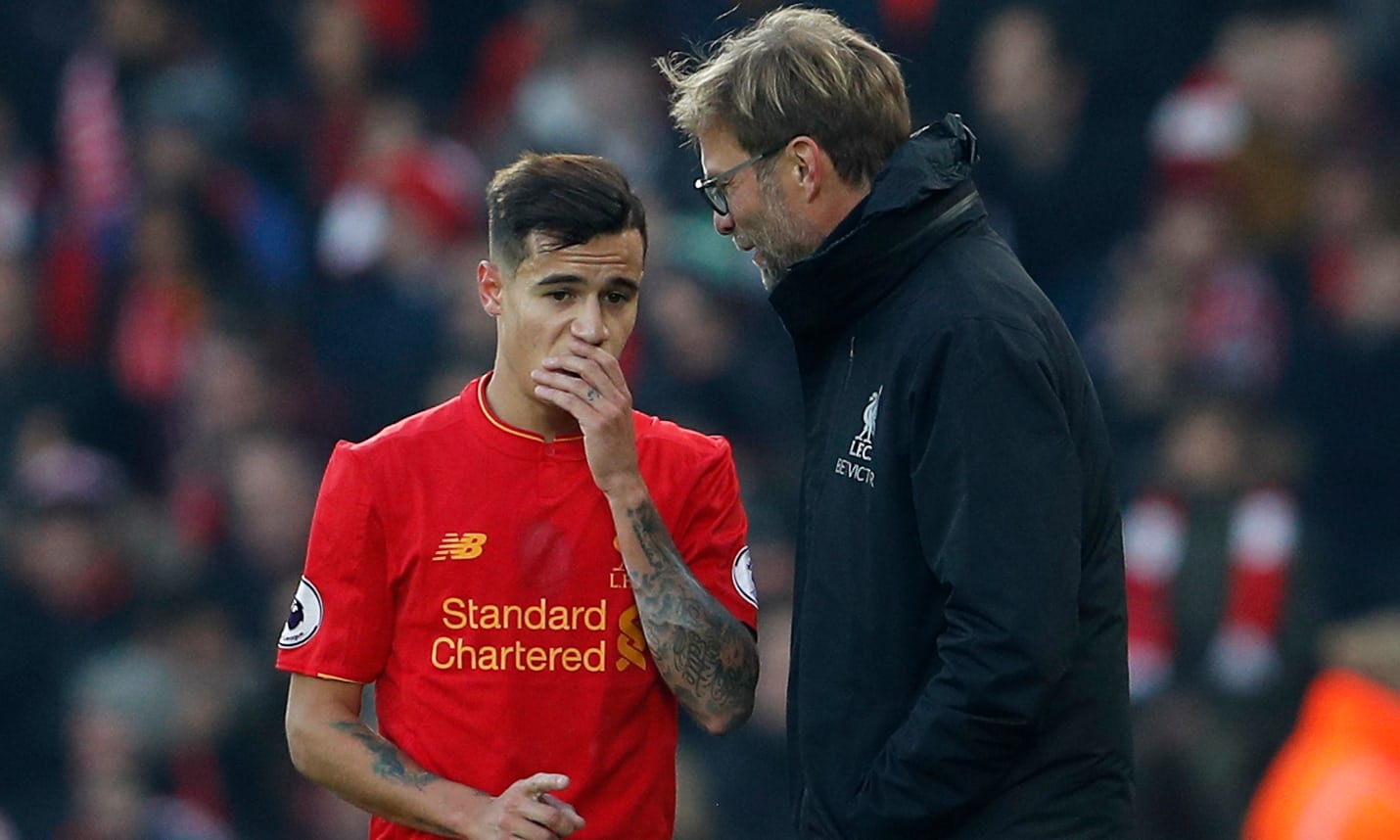
Liverpool have again told Barcelona that Philippe Coutinho is not for sale after rejecting a €100m (£90m) bid for the Brazil midfielder. Barcelona’s second offer, comprising €85m plus €15m in add-ons, was immediately rejected.
Barça returned with their latest bid for the 25-year-old on Wednesday having had an offer of €80m (£72m) rejected last month. It was met with the same response. Liverpool rejected the offer, reiterated to Barcelona they will not consider selling their influential playmaker this summer and, despite reports in Spain that a deal is imminent, consider the matter closed.
Whether that deters Barcelona from making a third offer remains to be seen, as their latest approach does reflect a confidence at Camp Nou that Coutinho is keen on making the move. Liverpool have repeatedly stated he will not be sold with Jürgen Klopp insisting last week that his club’s stance is not open to interpretation. Their position is strengthened by the five-year contract Coutinho signed only last season. That deal, worth around £150,000 a week, does not include a release clause.
While interested in joining Barcelona, Coutinho has not agitated for a Liverpool exit and has shown no sign of doing so since the first bid was made. Klopp spoke to the forward in Hong Kong when Barcelona first formalised their interest to stress his importance to the team and reiterate the club’s determination to keep him at Anfield.
That conversation, however, came before Barcelona banked £200m courtesy of Neymar’s departure to Paris Saint-Germain. They have since continued to pursue Coutinho as well as Borussia Dortmund’s Ousmane Dembélé, although claims a Barcelona delegation travelled to England this week to meet their Liverpool counterparts were inaccurate. Liverpool have had no plans to meet Barcelona to discuss Coutinho’s transfer.


How Paulinho turned his career around to earn a dream move to Barcelona

April 2017: Paulinho had messed up. There was the Brazilian in China advertising a betting site alongside a Japanese porn star. His club, Guangzhou Evergrande, were unhappy about being kept in the dark about such controversial activities and there was even wild talk of deportation. It was one of the few mistakes he would make in Asia.
Not even the most committed gambler in south China or north London would have bet back in June 2015, when the midfielder signed for Guangzhou from Tottenham, that he would be heading back west two years and two months later to join Barcelona. After all, the midfielder had been declared a flop in England after two underwhelming seasons with Spurs from 2013-15. So bad had it become, with three starts in his second campaign, that his next destination was China to join his former Brazil manager Luiz Felipe Scolari. We all know the reputation that the Chinese Super League has in Europe. The big names have arrived but the respect has not. Those who go there do so for the money.
Yet it is Barcelona who have splashed out, paying £36.4m (€40m) to activate his release clause, a fee roughly three times more than Guangzhou paid Spurs and more than twice the record amount a Chinese team have received for a transfer. European eyebrows are as raised as the fee. Just before the signing was confirmed, the BBC called the move “one of the more random transfers of recent times” and asked whether he would even be a good signing for West Ham or Everton.
One wonders how many have seen the former Corinthians midfielder play since he left England because Paulinho has been excellent in the Chinese Super League. He has been better than Alex Teixeira, better than Ramires, better than Ezequiel Lavezzi and better than Oscar (though an eight-match ban for the former Chelsea player for kicking the ball at two opponents during play, sparking a huge brawl, makes that comparison a little unfair).
“Sometimes in training we will just watch him,” said a former midfield partner Zheng Zhi, formerly of Celtic and Charlton Athletic. “He is a second ahead of everyone else.” Perhaps that is why he has time to advise and help the younger players at Guangzhou. Zheng added last week that Paulinho will be sorely missed but wished him well in his new adventure, sentiments that most fans in China share. The pain of parting may be mutual. On plenty of occasions Paulinho spoke of his satisfaction with life in China, on and off the pitch, and working with the protective arm of Scolari around his shoulders, a man who also knows something about leaving London with a reduced reputation.
Under Scolari, the 29-year-old became the perfect overseas signing, bringing power and authority to Guangzhou and the ability to dictate tempo and drive forward. In all he played 95 games – impressive in just over two years – and scored 25 goals, some of which were truly spectacular. If winning two Chinese Super League titles and one Asian Champions League is not enough to convince the doubters, then there is the more subjective point that Paulinho has been the best player in Asia for the past 18 months. Succeeding there is not a given. Guangzhou spent much more buying Jackson Martínez from Atlético Madrid but the Colombia striker has struggled. It remains to be seen if, and probably when, he returns to Europe, he will be known as a CSL flop.
Paulinho may or may not be the world-class talent that Barcelona fans were expecting to arrive with the first flash of the Neymar cash. Yet since leaving Europe he has not only shone in Asia, he has also returned to the Brazil national team. He had last played for them at the 2014 World Cup and it was assumed that playing in China spells the end of international careers.
It helped that Brazil’s manager, Tite, knew the player from Corinthians, but this was no sentimental selection. In World Cup qualification Brazil, who started along the road to Russia with a little wobble, won all eight games after the midfielder returned. A personal high-point came with a hat-trick in a 4-1 win in Uruguay in March. Perhaps Barcelona – and Bayern, who were interested back in April – do not see him as a Spurs failure but a vital member of a Brazil team who were first to qualify for the 2018 finals.
If Paulinho can rebuild his career with Brazil then he can reforge his reputation back in Europe. Chinese and Asian football is not held in high enough regard to remove the flop label – that will only change if more players leave for Europe’s bigger clubs – but Barcelona are.
The step up from Canton to Catalonia is obviously big but it could just be that Tottenham fans, for whatever reason, did not see the best of a very good player. Succeeding with Guangzhou may not automatically mean he is a world-beater but then struggling with Spurs does not mean the opposite. Paulinho has earned his chance.

Thursday, August 10, 2017


Liverpool’s Jürgen Klopp: we will not sell Philippe Coutinho at any price

Jürgen Klopp has insisted Liverpool will not accept any bids for Philippe Coutinho after the club rejected an improved £90m offer for the Brazil playmaker.
Barça returned with their latest bid for the 25-year-old on Wednesday having had an offer of €80m (£72m) rejected last month and, speaking to Sky Germany, Klopp was adamant that Liverpool are committed to retaining their best players.
“Liverpool is not a club that has to sell players. That is set in stone. So what they offer in the end doesn’t matter,” he said.
“From a financial standpoint, there is no price limit to let him go. No price at which we are ready to give in. Our goal is to have the best possible team. So we want to keep our guys and add new ones. That is our plan.”
Liverpool have repeatedly stated Coutinho will not be sold and their position is strengthened by the five-year contract he signed only last season.
“Today, no player on the planet is unsellable,” added Klopp. “But a transfer is also a question of timing and if you have the opportunity and the need to react to such a transfer.
“Also you have to ask, if you have the time to react. But just because of one request of one club, we don’t have to think about that. We are not in that situation.”
While interested in joining Barcelona, Coutinho has not agitated for a Liverpool exit and has shown no sign of doing so since the first bid was made. Klopp spoke to the forward in Hong Kong when Barcelona first formalised their interest to stress his importance to the team and reiterate the club’s determination to keep him at Anfield.
He is expected to miss the opening game of the Premier League season on Saturday, when Liverpool travel to Vicarage Road to face Watford, due to a back injury.

Wednesday, August 9, 2017


Zlatan Ibrahimovic and Manchester United in talks over return to Old Trafford

Manchester United have started talks over a new deal to bring back striker Zlatan Ibrahimovic, according to Sky in Italy.
The 35-year-old Swede is a free agent following his release from Old Trafford at the end of last season and is battling back to fitness after suffering a cruciate knee ligament injury in April.
His rehabilitation has continued at the club's Carrington training complex, with Jose Mourinho saying in July that he could resume at United despite Romelu Lukaku's arrival. "Why not wait for such a good player that gave us so much?" he said.
And with the latest news from Italy, it would seem United are stepping up their efforts to secure a return for the player who shone in his first season in the Premier League, scoring 28 goals in 46 appearances before injury struck.
Ibrahimovic's agent Mino Raiola told Sky in May there had been offers from "many leagues" for the former PSG and Barcelona striker and that he would "remain in Europe 100 per cent", adding he still had "one more year, maybe two" left in his career.
AC Milan have been the latest side to be interested in Ibrahimovic as they continue to overhaul their squad in a summer that has seen several Serie A sides make big statements in the transfer market.
Atletico Madrid were also linked, while LA Galaxy president said their doors were "always open" for a player they had an "incredible relationship" with.
Ibrahimovic would also be welcomed by his former team-mates. Paul Pogba said earlier in August: "He's still a big leader because he's still in the team, even he's not playing he's a leader outside of the pitch."

Tuesday, August 8, 2017


José Mourinho has spent lavishly again this summer to create a big, powerful side equipped for the title race – yet Manchester United must buy again

Guardian writers’ predicted position 3rd (NB: this is not necessarily Jamie Jackson’s prediction but the average of our writers’ tips)
In 2017-18 Manchester United have to be true contenders for the Premier League title. This is the minimum demand and undeniable truth facing José Mourinho as he embarks on a second campaign leading the record 20-times champions.
Given the Portuguese’s backing in the transfer market, he has no excuses if they are not challengers. Last summer Mourinho acquired Paul Pogba for a then world record of £89m and followed that up this summer by buying Romelu Lukaku for £75m from Everton, a record between two British clubs, the central defender Victor Lindelof (£31m) and last week the midfielder Nemanja Matic (£40m).
Factor in Henrikh Mkhitaryan (£30m) and Eric Bailly (£30m), who were also bought 12 months ago, and it is a £295m investment made by the Glazers, who own United. If Ivan Perisic or the AN Other forward Mourinho wants to complete his trading is recruited (for a minimum £45m), it will be close to £350m he has spent since taking charge.
Despite finishing in a lowly sixth place in the Premier League, last season was still a success. With Zlatan Ibrahimovic scoring 28 times in all competitions before a serious knee injury, Mourinho guided United to the EFL Cup and the Europa League. This last trophy completed United’s set of major honours and came with the precious prize of a Champions League place.
As the Europa League triumph left his men battle-hardened, Mourinho should set par performance in the continent’s elite club tournament at the quarter-finals, then back his managerial ability to see how much further he can take them. But it is the Premier League where the manager really believes his side can prosper. In Georgetown, Washington DC, before the final training session of the tour of the United States, Mourinho named Tottenham Hotspur as major favourites for the title while ranking United as having a fighting chance.
Do not be fooled. Mourinho’s team is not perfect but has been built primarily for domestic competition. It is big and strong, a powerhouse outfit the manager will instruct to try and bully most opponents.
A scan through his probable first XI illustrates this and points to weaknesses at left-back, No10, and in a wide attacking berth. The last two issues could be eased in a single acquisition if Mourinho obtains Perisic from Internazionale. Do that then United’s best side might read: De Gea; Valencia, Bailly, Jones/Lindelof, Blind/Darmian; Pogba, Matic; Rashford, Mkhitaryan, Perisic; Lukaku.
This 4-2-3-1 has no room for Ander Herrera so in a 4-3-3 to accommodate the Spaniard, Mkhitaryan would miss out and Perisic would play one side of Lukaku with Marcus Rashford the other. Mourinho also fielded a three centre-backs on tour and sees this as an option rather than a regular system for the coming campaign.
Whichever way he goes, a formidable unit can be fielded on any match-day that would contain only a couple of players Mourinho has inherited and is lukewarm about – the centre-back Phil Jones and Daley Blind or Matteo Darmian, the potential left-backs.
His goalkeeper, De Gea, has a definite case for being the best in the world and of Antonio Valencia Mourinho says: “There is no better right-back in football.” Bailly has convinced he should be first-choice and not just a player with potential. Matic was an integral part of Mourinho’s last Chelsea title-winning team of 2014-15, Pogba is the Portuguese’s on-field personification, and of the front four of Lukaku, Rashford, Perisic and Mkhitaryan, only the last causes doubt.
On Tuesday night in Skopje, United take on Real Madrid in the Uefa Super Cup final. After United were given a 1-0 schooling by Barcelona in their final outing in the States, Mourinho was open about the Catalan club and Real being on a different level to his side. The manager stated it is up to him to stymie the two Spanish giants with clever strategy. The encounter at the Philip II Arena in the Macedonian capital is a chance for Mourinho to do so but a more sure-fire way of achieving this is by beefing up recruitment. This should be straightforward but requires United to be more bullish. They must utilise the financial heft that was underlined by the £750m earned from the Adidas kit deal alone, plus Pogba’s presence as a statement of what United are building, to make a muscular move in the closing weeks of the transfer window.
If the ambition is to be the dominant Premier League force again and disrupt the Real-Barça-Bayern Munich continental hegemony, United need to target a player who would instantly improve them after scoring 18 Premier League goals last year, who is only 21, and has the requisite edge to perform at Old Trafford: Tottenham Hotspur’s Dele Alli.

Saturday, August 5, 2017


Liverpool transfer rumours and gossip: Philippe Coutinho latest


We round up the latest Liverpool transfers rumours from around the British and European press on Saturday, August 5.
Phil Thompson thinks it is "vital" that Liverpool keep hold of Philippe Coutinho this summer.
The founder of Catalan paper Sport has claimed on Twitter that Coutinho will be a Barcelona player soon.


Riyad Mahrez keen to finalise move from Leicester this month

Riyad Mahrez has told Sky Sports News he is still looking to finalise a move from Leicester this month.
The Algerian winger handed in a transfer request at the end of last season and interest has been high with a number of clubs showing interest both from England and abroad.
So far, only Roma have made an offer, with Leicester believed to have rejected two bids from them this summer.

Friday, August 4, 2017

Thursday, August 3, 2017


MATA THRIVES OFF UNITED'S ATTACKING SPEED

Juan Mata says the pace in Manchester United's front line is something he thrives off.

The Spain playmaker has the talent and know-how to be able to pick many a defence-splitting pass and with the signing of Romelu Lukaku adding further pace up front, Mata is excited about the prospect of United's goalscoring threat.

Mata was the Reds' match-winner on Wednesday night in Dublin as the Reds ran out 2-1 victors in the final game of Tour 2017, presented by Aon, and he says everyone is feeling positive after an excellent preparation period.

"It was a great pre-season," he told MUTV. "We had a few amazing weeks in the States playing some very good rivals and against Sampdoria it was difficult to beat this tough Italian team."

On the subject of attacking pace, Mata assessed: "That’s ideal for players like me as we try to look for passes for the quickest players.

"We all know how good Anthony [Martial] is when one-on-one with a defender, so I just tried to put myself in a good situation to finish. It was an important goal because we won."

Attentions now turn to next Tuesday's UEFA Super Cup match against Real Madrid and Mata is hoping for a change in fortunes after losing both of his appearances in the showpiece fixture so far.

"I’ve been lucky to have played in two [Super Cups] and unlucky to have lost two, so maybe it’ll be third time lucky," he added.

"Last season was a good season, now we have an opportunity this season to lift more [trophies]. Next week we have the chance to lift another one which is going to be difficult against a team like Real Madrid. Our minds are now focused on that."


PSG’s attempt to buy out Neymar’s Barcelona contract is rejected by La Liga

Paris St-Germain’s push to conclude the signing of Neymar hit an obstacle on Thursday when La Liga refused an attempt to hand over the money to buy out the forward’s contract at Barcelona.
The lawyers Juan de Dios Crespo and Marcos Motta went to the league’s headquarters to deposit €222m (£198m) and clear the way for Neymar to join the French club.

Tuesday, August 1, 2017


UNITED SIGN NEMANJA MATIC

Manchester United is delighted to announce the signing of Nemanja Matic from Chelsea on a three-year contract, with an option to extend for a further year.
The 28-year-old Serbian international midfielder has won a number of club and individual honours including league titles in both England and Portugal.
 
Jose Mourinho said: "Nemanja is a Manchester United player and a Jose Mourinho player. He represents everything we want in a footballer; loyalty, consistency, ambition, team player.
"I would like to thank him for his desire to join us because without that, it would be impossible to have him here. I am sure our players and supporters will love him. A big welcome to our new number 31."

Nemanja Matic said: "I am delighted to have joined Manchester United. To work with Jose Mourinho once again was an opportunity I couldn’t turn down.
"I have enjoyed my time at Chelsea and would like to thank the club and the fans for their support. I cannot wait to meet my new team-mates and to start training with them.
"This is a very exciting time for the club and I am looking forward to playing my part in creating more history for this great club."
Watch the exclusive first interview with Nemanja Matic on MUTV from 17:30 BST today (Monday), including on demand via the MUTV App and MUTV.com.

Monday, July 31, 2017


VALERENGA 0 MANCHESTER UNITED 3

Tour 2017, presented by Aon | Ullevaal Stadion | Att: TBC | Scorers: Fellaini 44, Lukaku 47, McTominay 70.

Manchester United eased to a serene 3-0 victory over Valerenga as the European leg of Tour 2017, presented in Aon, began in Norway.
Marouane Fellaini opened the scoring on the cusp of half-time with a deflected header and his compatriot Romelu Lukaku doubled the lead within minutes of the restart.

Scott McTominay capped a rewarding afternoon’s work for the Reds by clipping home a third in the 70th minute.

Jose Mourinho made six changes to the side that lost narrowly to Barcelona in Washington DC and the Reds, clad in grey, started brightly under gloomy, overcast Oslo skies.

Henrikh Mkhitaryan led the first assault on the Valerenga goal but could only find the keeper when sent clear by a probing Juan Mata pass in the third minute.

United dominated possession throughout a comfortable first half, with Paul Pogba as the chief inspiration. The effervescent Frenchman peppered the opposition goal with an array of shots, and his lifted, curling left-foot effort, which struck the Norwegians’ post, was the pick of United’s attempts prior to Fellaini’s opener.

The half appeared to be drifting towards a sedate close when the Belgian stooped to meet Mkhitaryan’s cross and head it home via a deflection to give United the lead.

Mourinho ordered nine changes at the break, as his team shifted from the 4-1-4-1 shape of the first period to 3-5-2.

A thunderous Lukaku header from a swirling Andreas Pereira corner made it 2-0 just after the restart and gave United’s imposing new striker his third pre-season goal.

Academy graduate Scott McTominay added a third after replacing the imperious Pogba, who delighted the rapt crowd throughout with his full repertoire of deft, creative touches. Valerenga barely threatened the United goal all evening, as the visitors made it five wins from six thus far during the pre-season period.

THE LINE-UPS
Valerenga: Kwaresey, Lundstrom (Gleditsch 64), Tollas, Jaager, Juklerod, Lekven, Agyiri, Zahid (Borchgrevink 80), Fredheim Holm, Ejuke, Finne.

Booked: Lundstrom, Ibrahim.

United first half: Romero, Darmian, Bailly, Jones, Blind, Carrick (c), Fellaini, Pogba, Mata, Mkhitaryan, Rashford.

United second half: Romero (J. Pereira 61), Fosu-Mensah, Lindelof, Smalling, Tuanzebe, Mitchell, Pogba (c) (McTominay 61), Herrera, A. Pereira, Martial, Lukaku.

Booked: A. Pereira.
TALKING POINT: POGBA IN MESMERISING FORM

After United were defeated by Barcelona in the final match of the tour's US leg, Jose Mourinho boldly remarked that Paul Pogba had showed he belonged at the ‘level’ of Messi, Neymar, Suarez et al. And few among an awed crowd at the Ullevaal Stadion in Oslo would disagree with that assertion on this evening’s evidence. Pogba’s 61 minutes on the pitch lent a certain air of electricity to what was otherwise a somewhat placid workout for the Reds. United’s world-record signing displayed a dizzying catalogue of swivels, feints and ingenious touches and looks to be benefiting from the kind of full pre-season that he missed out on in 2016. Familiarly, Pogba found the woodwork with his best effort on goal, but the midfielder appears to be in fine fettle as the Reds build up to the UEFA Super Cup final and the start of the Premier League campaign.

Sunday, July 30, 2017


POGBA AT SAME LEVEL AS REAL AND BARÇA STARS

Manchester United manager Jose Mourinho insists that Paul Pogba "belongs at the same level" as the top players of Real Madrid and Barcelona.
The Reds suffered a first defeat during Tour 2017, presented by Aon, at the hands of Barcelona on Wednesday, going down to Neymar's first-half effort in Washington DC, having beaten European champions Real Madrid on penalties on Sunday.
Speaking in his post-match press conference after the game against the Catalans, Mourinho was asked about the quality of the opposition during this summer's trip to America. And although he admitted it was "beautiful" to watch Barça's stars from the touchline, the boss reserved special praise for Pogba.
"With Messi and Neymar, there is only one [of each], there are not two," he said. "Suarez, Iniesta, Pique, Ronaldo, Bale, Modric, Toni Kroos, there is only one of them. So they can only play for one club and not two. 
"We cannot have them. They belong to the clubs. You can be working very hard tactically to improve your team, to improve your players, but some players are special and against that nature there is nothing you can do. In the real matches you try to compensate for the difference in quality with a certain tactical organisation, and with that you can win.
"In football it is possible for a team to be better than the sum of the parts. But the parts are amazing. Their [Barcelona's] relationship with the ball is amazing. You can argue about the occupation of space, tactics and compact blocks, but the player's relationship with the ball is still the most important thing. 
"Even as an opponent on the bench like I am, it is beautiful to see the guys' relationship with the ball. Today, one of my players, Paul Pogba, showed the level. He showed that he belongs at that level."
Pogba later posted a photo with Messi and Neymar to his official Instagram account.

Saturday, July 29, 2017


‘An electrifying jolt’: how Agüero’s goal sealed Premier League’s global rise

Not just a moment to remember, Manchester City’s thrilling late title win in 2012 embodied the Premier League’s ascent to international dominance 
 The big bang: how the Premier League was born

Sergio Agüero fires Manchester City to a thrilling title triumph in the greatest moment the Premier League has ever seen. Photograph: Dan Rowley/Rex/Shutterstock

It’s 4.53pm BST on 13 May 2012. The score at the Etihad Stadium is 2-2 between Manchester City and Queens Park Rangers and the game is into a fourth minute of added time. The Italian international Mario Balotelli has the ball on the edge of the QPR area. Slipping, he pokes a pass beyond two defenders into the box. His team-mate, a £38m recruit from Atlético Madrid the previous summer, manages to read the pass. With one touch, Sergio Agüero eludes a despairing final challenge. With a second, he fires the ball past Paddy Kenny. Flying into the near corner of the net, Agüero’s goal wins the game in the final second. It also means the 20th Premier League title goes to City, ahead of Manchester United on goal difference.
Owain Mumford saw the goal from the opposite corner of the stadium, low in the South Stand. “With the score at 2-2 we thought they’d gone and done it again,” he says. “City had bottled it and United fans would never let us forget it. There were younger lads in front of us who hadn’t been through the wringer with City before and they were bereft. They didn’t know what to do. Then the ball broke to Agüero. Initially I thought he would go down, but he didn’t. There was this huge sucking sound as the crowd drew its breath, followed by sheer pandemonium. I ended up in a pile with those lads and a load of stewards.”
Overlooking the ground from the media gantry was Martin Tyler, the Sky Sports broadcaster. He was commentating on the match and announced the goal to his audience with a howl, crying Agüero’s name and extending the final “O” for a full four seconds, which is a long time in television. “I knew when he took his touch that he was going to score,” Tyler says now. “I’ve been in the job for 38 years and it doesn’t always happen that you anticipate the moment, but he’s such a good player and his touch was so sure, I trusted my instinct. That allowed me just enough time to get air into my lungs.”
In Singapore, it was nearly midnight. About 60 members of the local Manchester City Supporters’ Club – Singaporeans, Malaysians, Indonesians and British expats – had gathered at Molly Malone’s in the Quayside district to watch the match. “The satellite feed went down for about 15 minutes with QPR 2-1 up,” says Chris Hollingworth, an Oldham native who had moved to the Asian city that year. “So you can imagine what it was like. Everyone had meandered outside because of the heat and were just milling around. But then the picture came back. I’d managed to make it to the doorway when Edin Dzeko equalised and the place went mental. Then Agüero got the ball and we were cheering before he’d even scored. It was the first time I’d met a lot of the lads and I went home with them arm in arm. It was the most incredible finish to a league ever.”
Bill Bush, the executive director of the Premier League, agrees with Hollingworth. “It was a huge electrifying jolt,” he says. “It was Man City announcing that they were there, that the noisy neighbours had arrived. It had been either City or United for the title for some time: two big-money clubs, two rivals going at it. It had a great local narrative that the rest of world football could enjoy. The Premier League is a soap opera but there are moments you can’t design. You just try to create an environment in which it might happen.”
Agüero has scored on 121 other occasions during his time in England but that moment is known as the “Agüero goal” and is among the most celebrated in Premier League history. It also serves as an instructive point from which to observe the changes the competition has gone through in its 25 years. Designed in a hurry during the spring of 1992, the Premier League looked very different by the time it arrived at its third decade.
In 1992 Manchester City was owned by the Football Association nabob and hi-fi entrepreneur Peter Swales. By 2012 the club had been bought by the ruling family of the emirate of Abu Dhabi. In the first weekend of the Premier League, 22 clubs fielded 12 foreign players between them. In the final weekend of 2011-12, 116 of 220 starters were born outside the UK. In terms of wages, Agüero had signed for City on £200,000 a week. In 1992 the average salary was £75,000, a year. And while the 48,000 in the ground enjoyed an experience they would take to their graves (even the QPR fans, who saw their side avoid relegation), an audience thousands of times greater was watching around the world on television.
If there is one thing everyone involved with the Premier League agrees on, both inside the organisation and out, it is that it could not have become fully realised without TV, and more specifically Sky. The satellite broadcaster had blown terrestrial rivals out of the water to win exclusive rights to show the new league in 1992. Twenty years later and it was the dominant partner in a deal worth £1.78bn to the competition. Later that summer an even greater sum was to be agreed, Sky sharing the rights with BT Sport for £3bn (renegotiated once more since, that sum is now £5.14bn).
As well as upping the fee, each new deal also increased the number of matches shown on screen. In 1992-93 the total was 60, in 2011-12 138, and next season 168 matches will be broadcast live. TV money funded new stadiums across England and Wales. It funded hi-tech academies for the development of young talent. It also encouraged foreign takeovers of clubs and provoked an orgy of spending on players; their transfer fees, wages, loyalty bonuses and the extra percentages on top for their agents. These were all indirect effects, however. What Sky did directly was to change the way we saw the game, how we watched it and how we talked about it.
Tyler was just one part of a grand team covering the match in Manchester on that memorable day. There were cameramen (with up to 33 cameras), editors, graphics designers and producers, all working to make sure the coverage did not just show the events but told a story. They were aided by a change made in 1995. In agreement with Sky, the Premier League had decided that, for the first time, the season’s final round of fixtures would be played simultaneously on a Sunday.
For the League this was “to ensure there is no unfair advantage to any of the clubs involved in relegation and championship issues”. For Sky it meant they could show two competing fixtures at the same time and heighten the drama. From then on the day became known as either “Survival Sunday” or “Championship Sunday”, depending on which was more relevant.
In 2012 Sky could not just show two matches on separate channels but on the same screen, plus a variety of other information to boot. Sky’s director at the Etihad that day, Tony Mills, was able to tell not just the story of the match but of a league title. United had been playing at Sunderland and had already won by the time City’s game entered injury time. Mills immediately put a graphic on screen that showed United at the top of the league table, as things stood. Then he went further, adding inset footage of United’s players, on the pitch, waiting for their rivals’ match to end.
“Tony took a chance at splitting the screen,” Tyler recalls. “But he ended up showing United players watching the City match on our monitors at the Stadium of Light. As we cut back, Balotelli stretched for the ball. You couldn’t have post-produced that any better, and Tony did it live. One of the reasons why this story is so powerful is because the vision of it was so splendid.”
This was the Sky way in microcosm. Technical innovation alongside an unwavering focus on narrative. Everything had to tell a story. The pictures, the commentary, the post-match analysis, the round-the-clock rolling news channel. The subjects of the story could be sporting moments such as Agüero’s, or controversial moments such as Joey Barton’s sending off in the same match. They would be articulated by strong personalities, especially the managers, City’s Roberto Mancini, who had declared “we don’t have any chance, the title is gone” less than a month earlier, and United’s Sir Alex Ferguson who congratulated City on their title in a post-match interview before adding: “It will take them a century to get to our level of history.”
One of Sky’s earliest innovations, from its very first match, was to ensure a camera was focused on the managers. By obligating the same coaches to talk to TV both before and after games, the Premier League showed once again they understood their partner’s priorities.
The second defining trend in the Premier League story, that of global expansion, followed on from the first. Before the Premier League came into existence, English football lost money on its overseas TV deals. Such was the paucity of income, big clubs even agreed to share the money equally with small clubs in the League’s founding agreement. But within five years the Premier League was taking foreign TV rights seriously, selling on a country-by-country basis to local broadcasters who, like Sky, were looking for a competitive advantage.
In 2010 it launched its own channel, again following the Sky model, producing content that would help foreign broadcasters fill gaps between matches. That station, often to be found conducting phone-ins with irate Arsenal fans from Lagos, is now seen in 185 countries. With 23 separate deals in place across the world (some for single countries, others for entire regions), the Premier League now earns £1.1bn a year from overseas TV.
The upshot of all this change is the Premier League has turned a local spectator sport into a global TV phenomenon. The success is down, in no small part, to understanding the needs of the medium. But there are other reasons why the Premier League can inspire devotion across the world from people who may never have even visited the UK.
Firstly, to appeal to a global audience it helps that 65 different nationalities are represented in the competition. Its style of football is not only action-packed, but full of players giving their all (one that, incidentally, conforms to a dusty stereotype of English fair play).
There is a relative absence of scandal, barely a hint of corruption, which means viewers are inclined to trust what they are seeing, and it is in English, everyone’s second language. There are more unlikely, but equally significant factors, such as the fact the Premier League (unlike Spain’s La Liga) organises its calendar months in advance, making it easy for broadcasters to plan a schedule. Similarly, the absence of a winter break (unlike Germany’s Bundesliga) means there is football to watch all year round.
One final reason behind the Premier League’s success is the organisation itself. In its conception the League was designed not as a sporting body but as a start-up business. Its founding agreement encouraged internal competition and structural flexibility. That agreement was handwritten on two sides of A4 paper. The Premier League Handbook is now 655 pages long and contains rules on everything from the position of TV cameras to watering the pitch at half-time.
Now employing 130 people, the Premier League is still a relatively lean organisation but it is a mean operator. It saw off regulatory challenges over the sale of its TV rights and rode out scandals over the third-party ownership of players (Carlos Tevez) and financially reckless ownership of clubs (Portsmouth). According to Bush: “Everything that seemed straightforward in 1991 was substantially more complicated even by 1995. By the 2000s we were Britain’s biggest audio-visual overseas export. We’d had three bruising rounds with the regulator over how we sell our rights, we’d had the third-party ownership stuff, we’d had the Portsmouth crash, we’d had various other things. I don’t think the founding fathers thought these things were going to happen. They knew it was brave, they knew it was going to be exciting, but I don’t think anyone could have known what was coming.”
One man who, to this point, has had an uncanny sense of what was coming round the corner is Richard Scudamore. The executive chairman of the Premier League, who served as chief executive from 2004 before stepping up to his current role (a type of switch, it is worth noting, commonly frowned upon in the corporate world), has presided over all of the League’s boom years. Feared and admired in equal measure, those who have worked with Scudamore describe a man with an acutely sensitive political antenna, able to satisfy the needs of his 20 member clubs without jeopardising the qualities that set the competition apart.
As CEO of the FA between 2010 and 2014, Alex Horne worked closely with Scudamore and says he is “equivocal about change”. Yet Scudamore has been notably vocal in his support of the League’s globalisation, the very change that has left many long-standing football supporters in England disenfranchised.
After the final of the Premier League Cup, a pre-season trophy featuring Liverpool and Leicester City in Hong Kong this month, Scudamore straightforwardly championed the claims of the fan whose love for the game has nothing to do with where they were born. “I fully understand those who have bought a season ticket, been to every game home and away for the last 25 years, deem themselves to be at the highest echelon of fan commitment. I get that,” Scudamore said. “You can’t take that away from anyone but I also think those fans realise that now the Premier League and those clubs are global success stories.
Liverpool fans in Hong Kong show their passion for the Reds during the Premier League Asia Trophy final last weekend. Photograph: Plumb Images/Leicester City FC via Getty Images
“That global success has come from interest that other fans have. This is not a patronising, false interest. The bit that always strikes a chord [with me] is how knowledgeable and passionate they are. I would put a lot of people here on these trips up against anyone back home, pub quiz, in terms of knowledge of the club.”
However you might read those remarks, they are hardly a bromide to the “left behind” supporter in the UK, those who cannot afford to get in to matches while the game drowns in riches. But there is another reason they cannot get in: because the grounds are already sold out. “Despite what people think fans are at the heart of the Premier League’s success,” says Bush. “What’s the test of that? Grounds are bigger, more pleasant places to go to. Gates are much, much larger, and we sell out. There are a more diverse range of people in the stands: more women, more younger people, more supporters from ethnic minorities. High ticket prices are not typical; the average price for an adult without concession last season was £31. That compares so well with other high-end attractions.”
Yes, the phrase “high-end attraction” might jar for those who would prefer their football club to be an extension of a local community. But the fact is that a broader pool of people want to watch the Premier League than they did 20 years ago and their reasons are often similar to those of supporters in Hong Kong, Singapore and Lagos.
This has led to an almost constant tension between UK supporters groups and the Premier League, over whether the organisation listens enough to fans’ needs does enough to redistribute its riches around the game. It was only after a well-organised campaign against high ticket prices for Premier League away fans that prices were capped at £30 (supporters wanted £20). But those prices are now lower than several clubs in the Championship. Fans outside the big six clubs – United, City, Arsenal, Chelsea, Liverpool and Spurs – say they are either satisfied or happy with pricing. Another initiative, safe standing,, by which fans and clubs both hope to maintain an atmosphere distinct from that inside of a theatre, is very much on the agenda. A more substantial problem is the scheduling of matches, with TV’s demands requiring long journeys for away fans on weeknights.
If previous experience of the Scudamore era is anything to go by, a low-key compromise on the fixture issue will be the likely outcome. This has been the case with another tension: that of the Premier League’s role in helping develop the England team.
This was given as one of the main motivations behind the League’s formation, though one easily dropped when the deed was actually done, and the performance of the England team has steadily declined over the past 25 years. Acrimony has broken out over a shortage of talented English players and their absence from Premier League XIs.
In his role at the FA, Horne was at the centre of this tension, but says the Premier League proved a willing partner in trying to rectify the problem. “When I was leading the FA I was very much of the view that English players in the football system was something we had to crack from a systemic perspective. And I was convinced that club owners and people in the Premier League were 100% aligned with us on getting that system to work better. In fact, my view was that we at the FA were a long way off the professionalism that existed in some academies. So we shamelessly recruited from academies.”
A new system, under the aegis of a former Premier League youth coach in Dan Ashworth, was agreed between the FA, the Premier League and the Football League. The Elite Player Performance Plan again has its critics, mainly because it has created an elite number of clubs specialising in developing young players. But those players are being developed. This summer England’s under-17, under-20 and under-21 sides all performed creditably in international tournaments, with the under-20s world champions in their age group. The next challenge is to get the youngsters playing regularly in the Premier League. Again it is a challenge that, from a distance, might seem insurmountable. “To write rules about how often a young player should play is impossible,” says Horne. “But the economic reality is that clubs are now investing in a system and want an outcome for it.”
In 2017 it is common to hear that globalised capitalism is in retreat, at least as a political idea. The Premier League, however, continues to fly the flag. Where possible it likes to leave the market to find a solution, its approach to regulation (pitch sprinkling apart) is laissez-faire. It is hard to argue that this approach has not been successful. The next step on its journey would appear to be even further away from its roots and focusing more on its international support. It is also likely to concentrate less on the “in ground” supporter in preference of the “modern fanatic” (the League’s own term) who lives and breathes football online. At some point a bubble may burst. On the other hand, something unexpected and compelling may emerge.
On the future of the Premier League, Martin Tyler is an optimist. “I grew up with the Third Division North and South,” he says. “Then suddenly my team were playing Gateshead and not Swindon. It was a change I hadn’t expected and wasn’t sure about. There is a resistance to change in our British psyche, even my kids are nostalgic and they’re in their 20s. There’s always room for that but you have to look forward. The key question is: is it change for change’s sake or is it developmental change?
“I am challenged in my job to be constantly aware of the present and to look forward to the future. I have to be ready for Arsenal v Leicester on a Friday night for the start of the 26th Premier League season. But I’m absolutely excited. I have to be in tune with what’s happening now. Even Agüero is gone!”